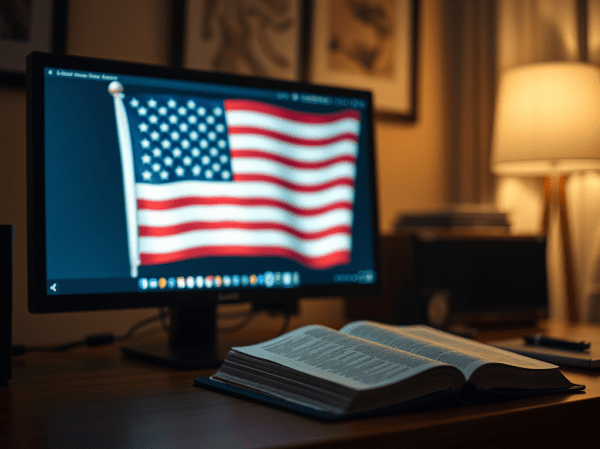
I’m not going to lie… I may lose friends over this post, and may even gain a few enemies. Believe me when I say that disunity is not the point of this post. As I write this out, I’m just recently back from a mission trip to Vermont…a mission trip that opened my eyes to the conversations that I have not have been paying attention to. As you probably have discovered, I am a Bible-believing evangelical Christian based in the deep South who tries to do his best to exemplify Christ is every facet of my life. I am by no means perfect, but I am faithfully trying to serve and honor God while I have breath. So when I write this, know that I am writing from my heart and trying to honor God through my words.
During the course of this election, I have seen more discouragement, more hatred, and more division than I ever have seen in my 44 years on this earth. I recently finished reading a book, “Following Jesus In A Digital Age” by Jason Thacker that really sparked this line of thinking. Some days, I find it hard to fathom how low we have sunk in our inability to love others and respect differing viewpoints. No longer can we have cordial conversations where there are differing views. Instead we have discussions where both sides interrupt each other or talk over one another (see the example that has been set by our two presidential candidates). I’ve been shocked by the vitriol Christians are spitting through social media. Pastor Jonathan Leeman elaborates, “The political Left and Right used to talk and reason with each other. Now they just shout” (Thacker, 105). Whether we choose to believe it or not, we can easily be shaped by what is happening around us rather than seeking the wisdom that only comes from God. Thacker writes, “…we are increasingly being shaped by a society that sees truth not as something provable or reliable or objective but rather a custom-made, personally assembled crutch to support one’s already-decided desires, opinions, and preferences” (Thacker, 42).
The reality is this: while Facebook and other platforms like it are a phenomenal resources, they are also distinctly creating division with people who may be exposed to your postings. While you are playing “keyboard warrior,” you have no clue what is going on beyond the screen of the individual with whom you are conversing with. Instead, you rage on social media. “My way is right and yours is wrong,” you say. Thacker reminds us that “the faces on the other side of all those devices matter to God” (Thacker, 66). He continues, “They are not your virtual enemy to treat as you wish; they are HIS image-bearers (emphasis mine), and you will answer for how you treat them, even if they were in the wrong” (Thacker, 66). We desperately need to develop some sense of decorum, meeting people where they are, and loving them like Christ does His church. However, it becomes easier for us to seek wisdom outside of the Gospel, instead turning on the news and becoming more intrenched in our own viewpoints, furthering the divisions among us.
Like I said previously, we are being shaped by the culture around us and as Christians, it is up to us to demonstrate how to live, and love, like Christ. Thacker explains, “Where worldly wisdom says to pass the blame, biblical wisdom says to take personal responsibility for our actions online.” (Thacker, 88). Oh how I wish I could go back and remove some of the things that I posted in my younger days! How I wish that someone was there to tell me, “have you prayed through this” before making my latest post. My pastor said it best one Sunday, “Your Facebook page is not a journal, it’s a billboard” (Pastor Chris Johnson). What exactly are we promoting through our social media content? Are we demonstrating a Christ-like love in how we are engaging with those online? Is our main focus to promote the type of content that would honor and glorify Christ? And, how many more of those will we gladly walk over just to make an argumentative point? Also, this isn’t just about politics. There are plenty of conversations throughout social media that are causing division like pro or anti-vaccination posts, pro or anti-gun reform posts, gay rights, immigration, and the list goes on and on.
Christians, hear me out: we MUST do better!
Technology is and has been a tool for us to use, but sadly at times it seems to be using us. Thacker explains, “While it is right to say we use technology for good (or bad) purposes each day, it is probably more accurate to say technology is discipling us each day, forming us and shaping us in a very distinct way” (Thacker, 12). Now here’s the hard truth: I am deeply burdened and sad by how my fellow brothers and sisters in Christ have used technology to bring about their braggadocios and hateful attitude. The main posts have been saying how good God is or how this was God’s will. Friend, if Kamala Harris had gained the presidency and we had woken up to a different reality, God would still be on His throne and His will would still be done. How quickly we forget about the rulers and kings (some good and some bad), and yet God’s will was still accomplished. God is forever sovereign. So friend, remember that when you post, there is someone on the other side of that screen that may have a differing view than your’s. Be discerning and approach them in love, especially if they are a non-believer.
Be better. Do better. The Kingdom of God is at stake.


 Earnest Worship
You must be logged in to post a comment.